
A temporary repair is supposed to prevent an injury, not cause one. Unfortunately, sloppy half measures can lead to full injuries. Plywood over a rotted step? Duct tape on a rickety handrail? A placemat tossed over cracked tile? Quick fixes like these fail every day, and the people standing on them pay the price. Worse, many victims assume that because the owner “at least did something,” there’s no case.
Wrong. That shoddy patch job only helps prove the owner knew of the existing danger. If a hazardous quick fix landed you in the hospital or doctor’s office, then it might be time to talk to a Philadelphia premises liability lawyer, someone to hold the right people accountable.
Here is how liability works for a temporary repair injury and why notice matters more than you’d think. We’ll also discuss who might be owing you compensation.
Understanding Liability for Faulty Temporary Repairs
Property owners in Pennsylvania owe the people on their premises a duty of care to keep the property reasonably safe. They must fix dangerous property conditions and warn visitors about hazards that cannot be repaired right away. A temporary fix does not absolve an owner of that duty.
The law is the law. It does not grade on effort. If the plywood buckles, the tape peels, or the jerry-rigged railing pops loose under your hand, that’s the owner’s fault, not yours. They could be liable for property owner negligence. In fact, they could be deemed even more accountable, because a botched patch can create a new hazard that didn’t exist before.
Courts ask a simple question: Did the owner act reasonably? Leaving a known danger under a Band-Aid for months probably won’t satisfy a judge or jury.
Common Scenarios Involving Dangerous Temporary Fixes
Certain quick fixes show up over and over in injury claims. Here they are:
- Plywood or steel plates over floor holes that shift, crack, or sit unmarked in a walkway
- Duct-taped or zip-tied handrails that collapse the moment someone actually needs them
- Unsecured mats or rugs thrown over damaged flooring, hiding the hazard instead of fixing it
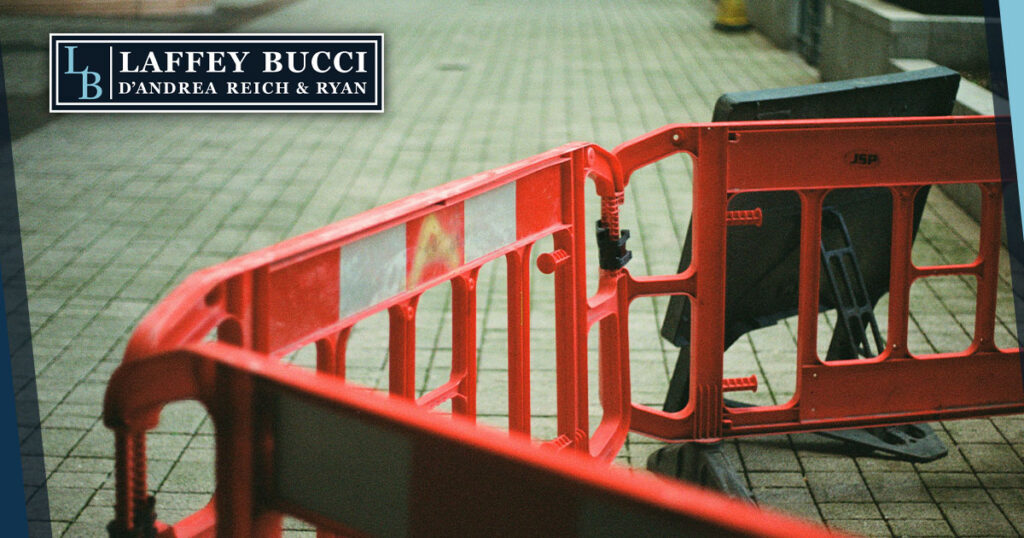
- Makeshift construction barriers that collapse or steer foot traffic straight into other danger
- Patched-up workplace machinery running without proper safeguards
- Cords and hoses taped across walkways as a permanent “temporary” arrangement
Most of these half-efforts flunk standards that property owners are supposed to know. OSHA’s walking-working surface rules, for example, require workplace surfaces to be kept free of hazards and repaired before employees use them again.
Negligent property maintenance isn’t a paperwork issue. It’s how people literally end up in emergency rooms.
The Role of Notice in Property Maintenance Claims
Okay, this is where a temporary repair case gets interesting. To win any negligence claim, you’ve got to show duty, breach, causation, and damages. The hardest fight tends to be proving the owner actually knew about the hazard.
That’s easy in these cases. Nobody duct tapes a handrail they don’t know is broken. That duct tape might as well be its own admission, right in plain sight.
Lawyers sort this kind of knowledge into two bins: actual notice, meaning the owner knew of the hazard, and constructive notice, meaning the owner should have known. A documented temporary repair hands your case actual notice of the original defect. It also begs the question: How long did the owner sit on a permanent solution?
There is no law stating when “temporary” expires. Still, the longer a hazardous quick fix lingers, the weaker “we acted reasonably” sounds to a jury. Also, if nobody posted a visible warning, a failure to warn claim gets thrown in too.
Here’s some practical advice: Photograph the shoddy repair before it disappears. Owners develop a sudden enthusiasm for permanent fixes right after somebody gets hurt.
Potentially Liable Parties for Inadequate Repairs
The obvious defendant in an inadequate repair lawsuit is the property owner. However, they’re often not the only party who can be liable.
Who else touched the hazard?
- A third-party contractor who put in the shoddy patch?
- A maintenance company that ignored a work order?
- A property management firm whose definition of “temporary” extends to a full year?
- A commercial tenant responsible for property upkeep under lease terms?
Suing for faulty repairs frequently means naming more than one defendant. That’s not necessarily a bad thing. More defendants can mean more insurance coverage to boost your recovery. Pennsylvania generally gives you two years to file a personal injury claim, so sorting out who owns the failure should not wait.
An Injury From a Quick Fix Deserves a Full Answer
You’ve been hurt because someone chose a patch over a repair, and that choice left plenty of evidence behind. Laffey Bucci D’Andrea Reich & Ryan has spent years holding property owners, contractors, and management companies to the high standard Pennsylvania law demands. Our Philadelphia attorneys know how to turn a “quick fix” into lasting accountability. If a temporary repair caused your injury, speak to an attorney about your options. Unlike the patchy repair that put you in this predicament, your rights are solid and permanent.